Critical closing pressure in the circulation : Understanding the vascular waterfall phenomenon
This review explores the historical development, physiological foundations, clinical implications, and future directions of the vascular waterfall model in critical care.
Key points :
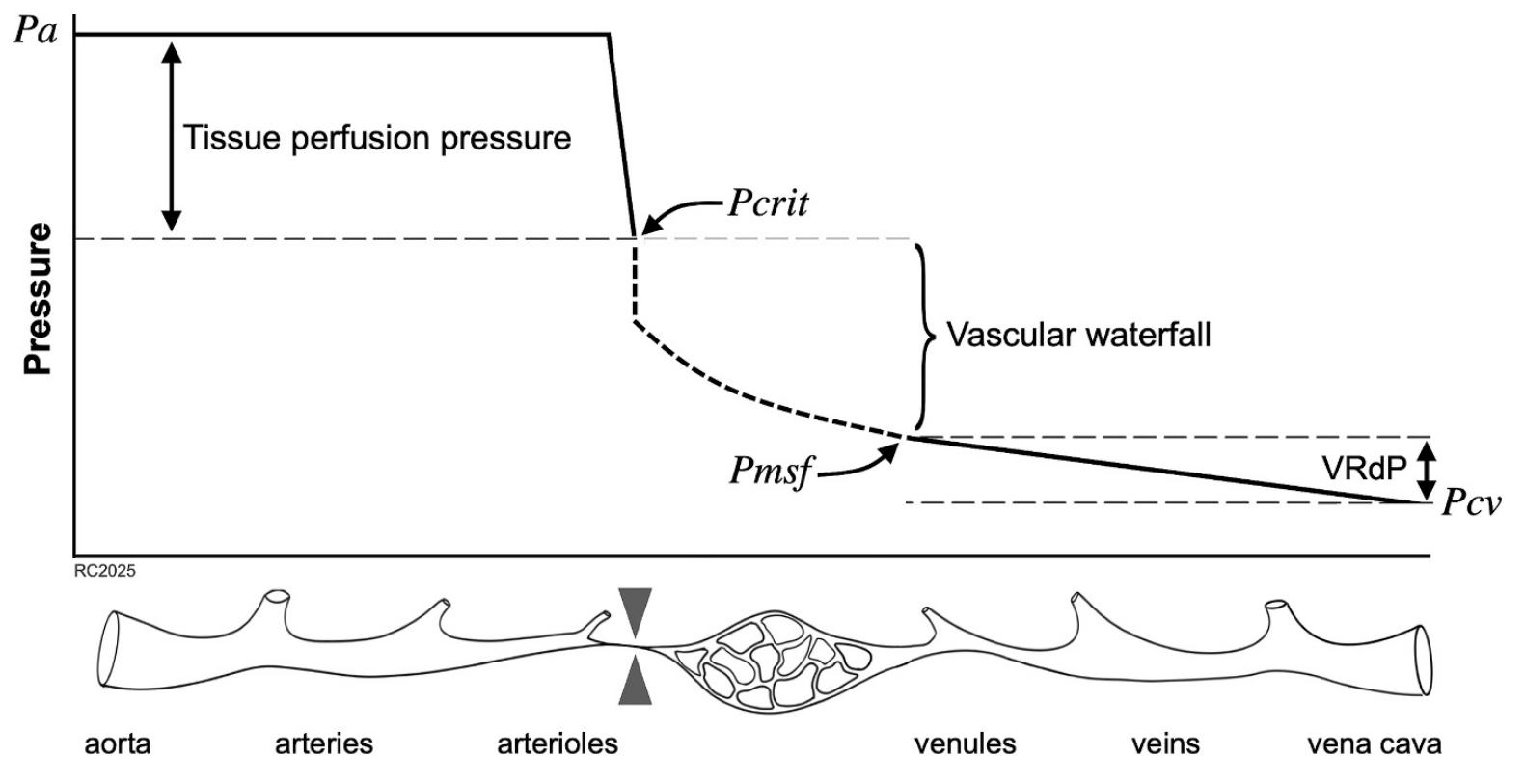
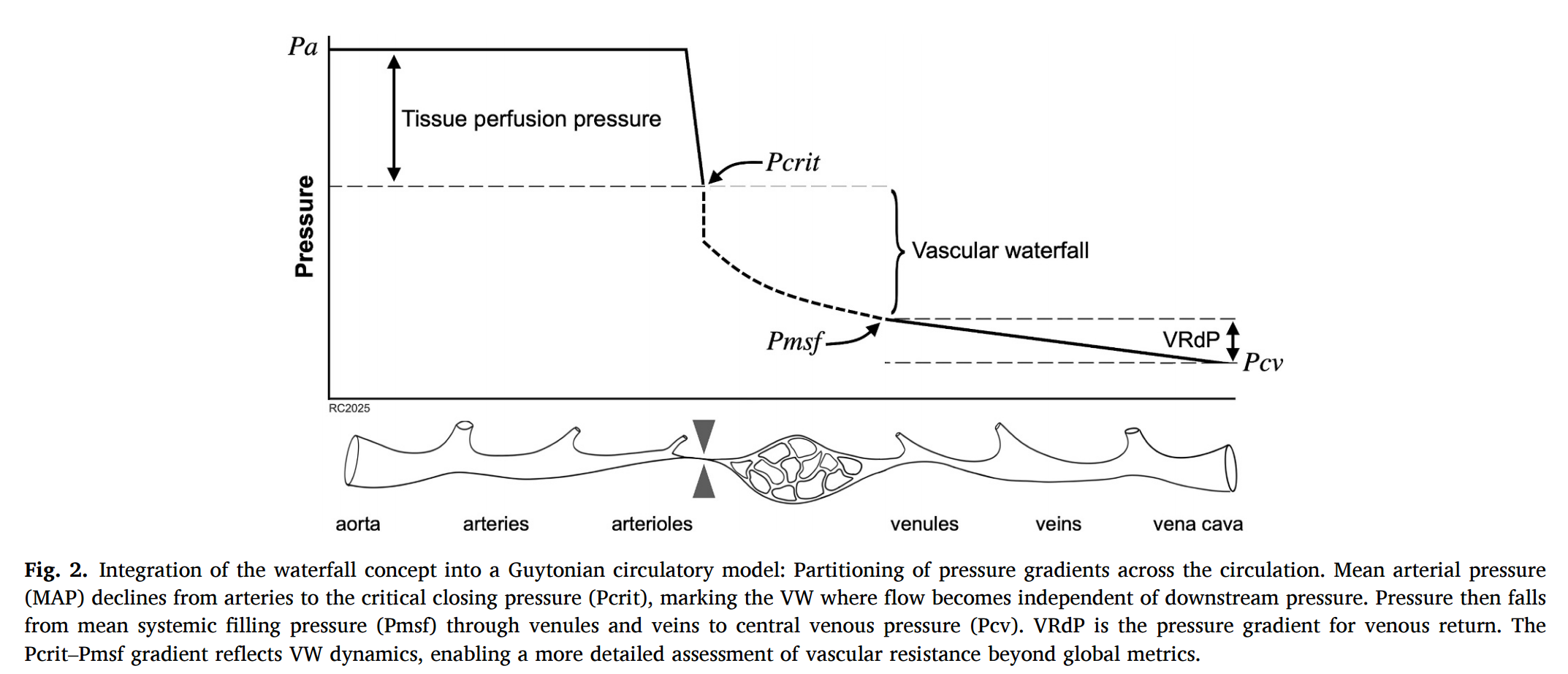
• Arterial pressure, vasomotor tone, and tissue forces define Pcrit as a dynamic flow-limiting threshold.
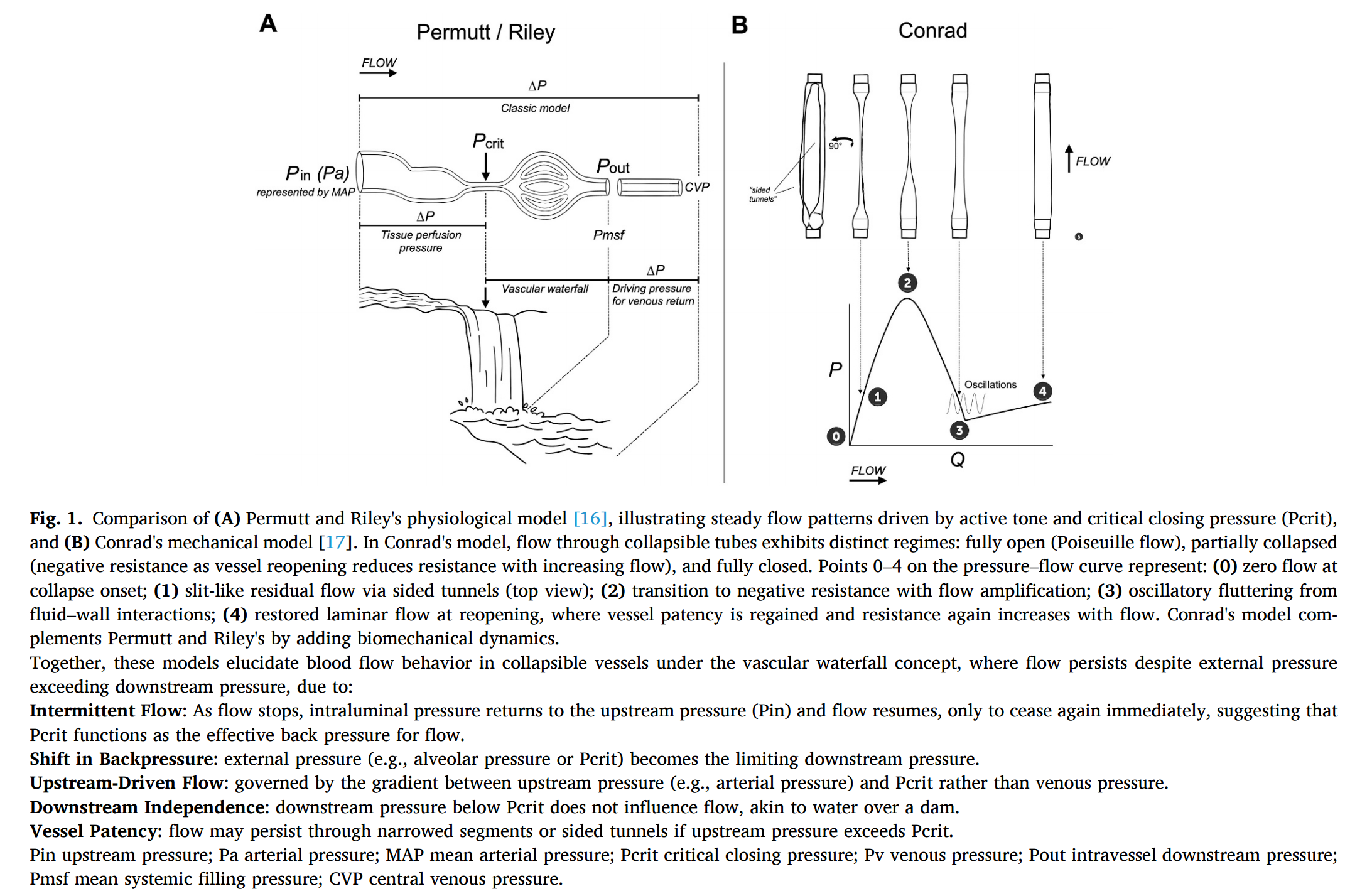
• Conrad’s collapsible tube experiments explain nonlinear resistance and oscillatory flow beyond Starling resistor models.
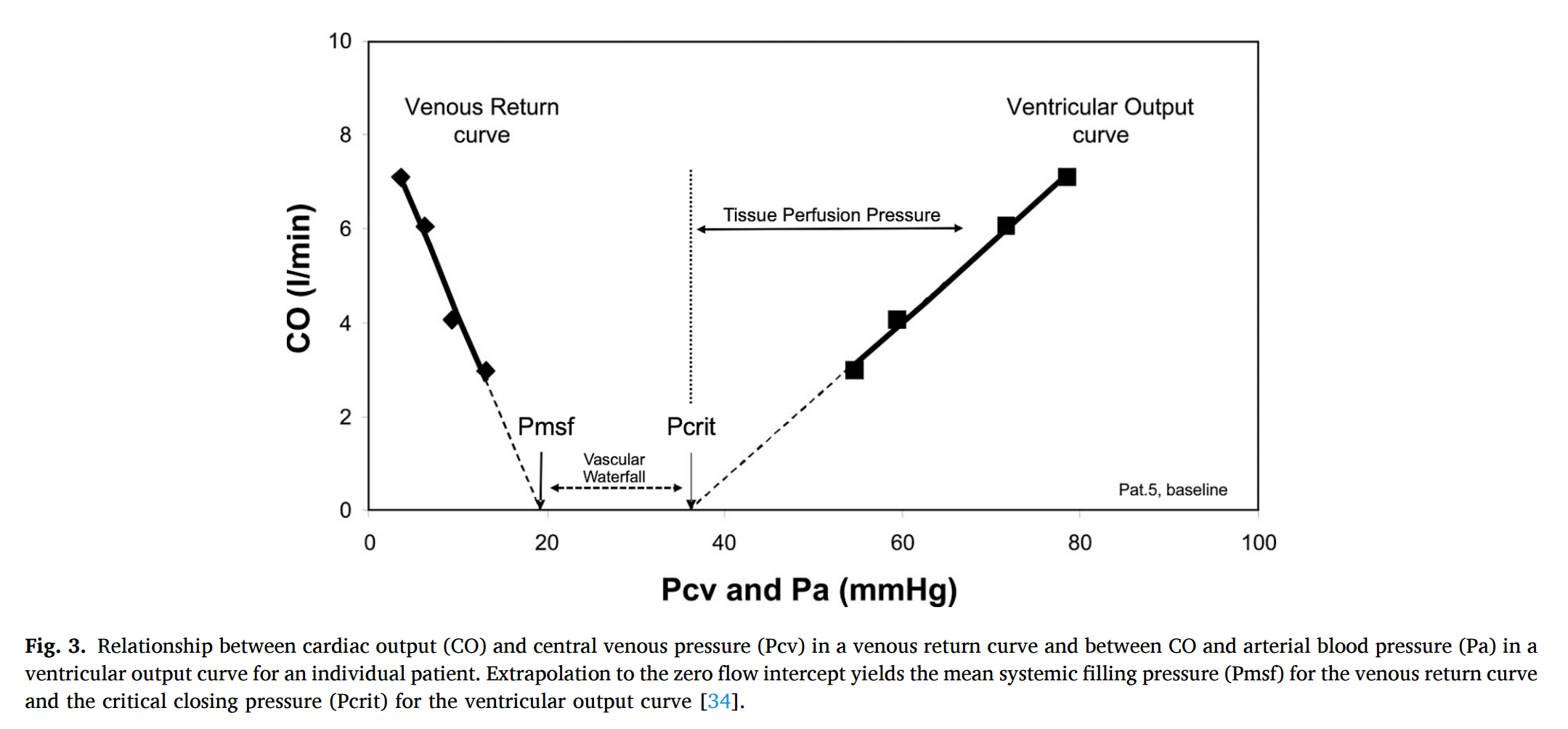
• When Pcrit exceeds Pv, regional autoregulation and flow redistribution occur, making tissue perfusion downstream-independent.
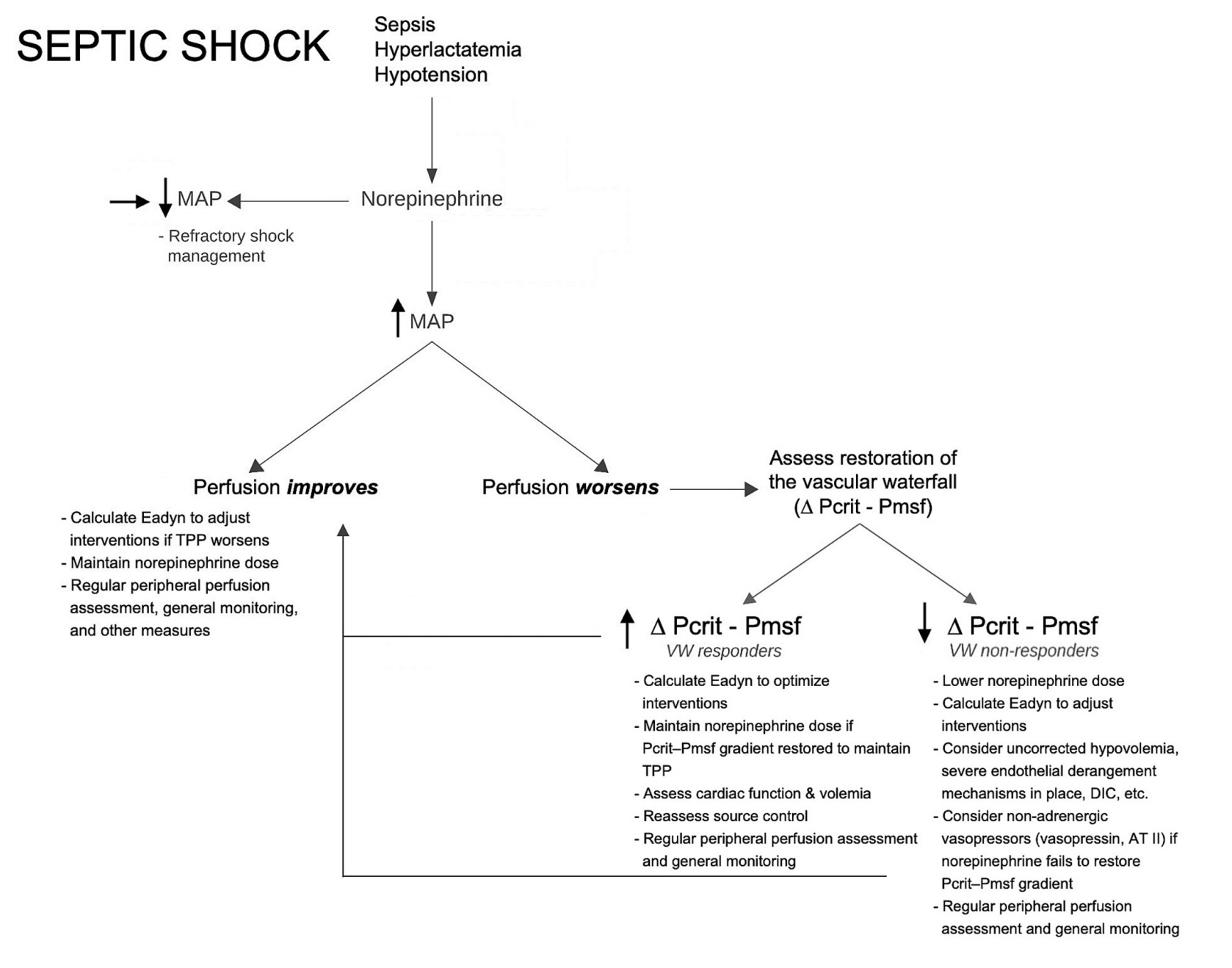
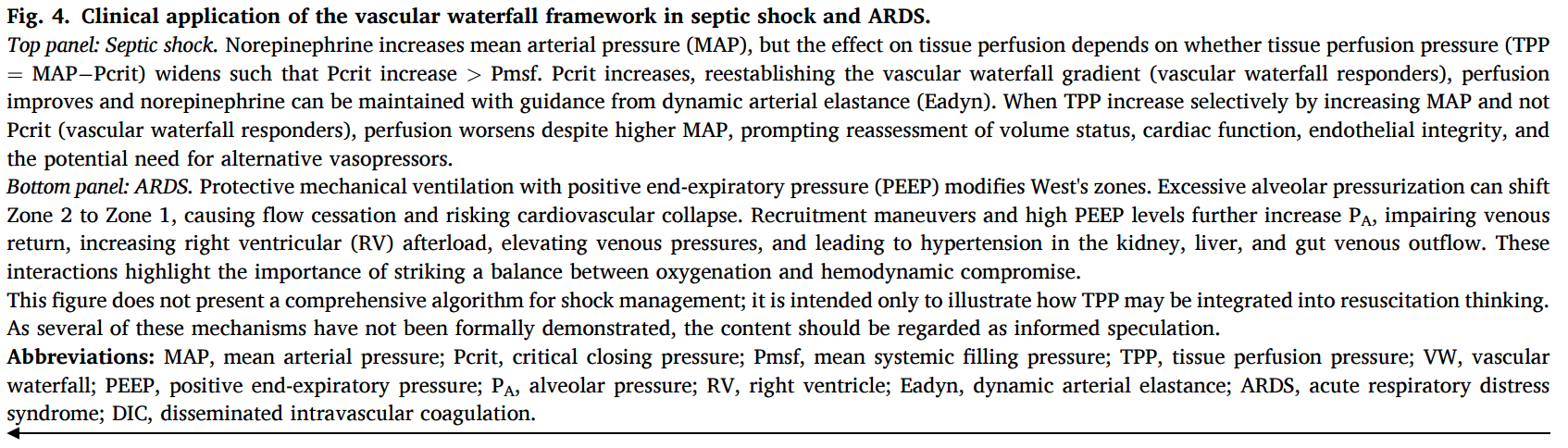
• Vasoplegia lowers Pcrit, abolishes waterfall and impairs autoregulation, supporting vasopressors’ role to restore DPcrit–Pmsf.
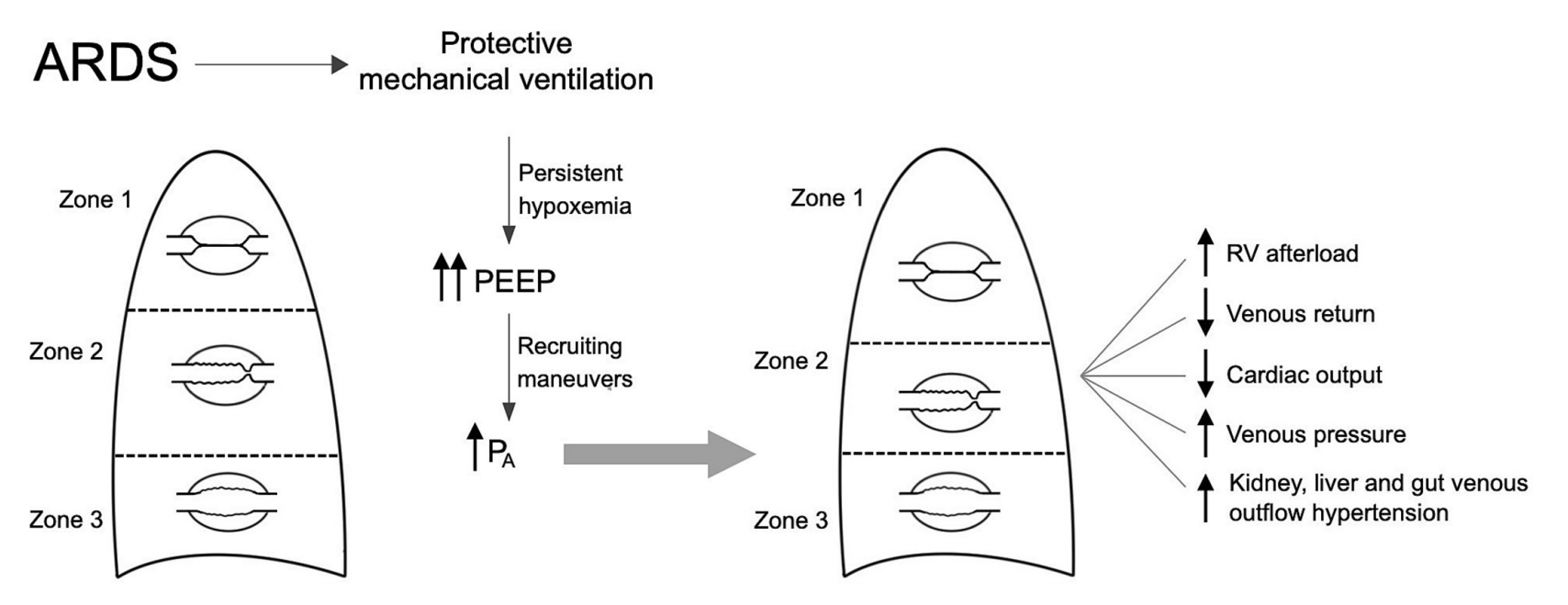
• The vascular waterfall explains RV afterload changes due to alveolar/pleural pressure shifts during mechanical ventilation.