Role of the interstitium during septic shock: a key to the understanding of fluid dynamics?
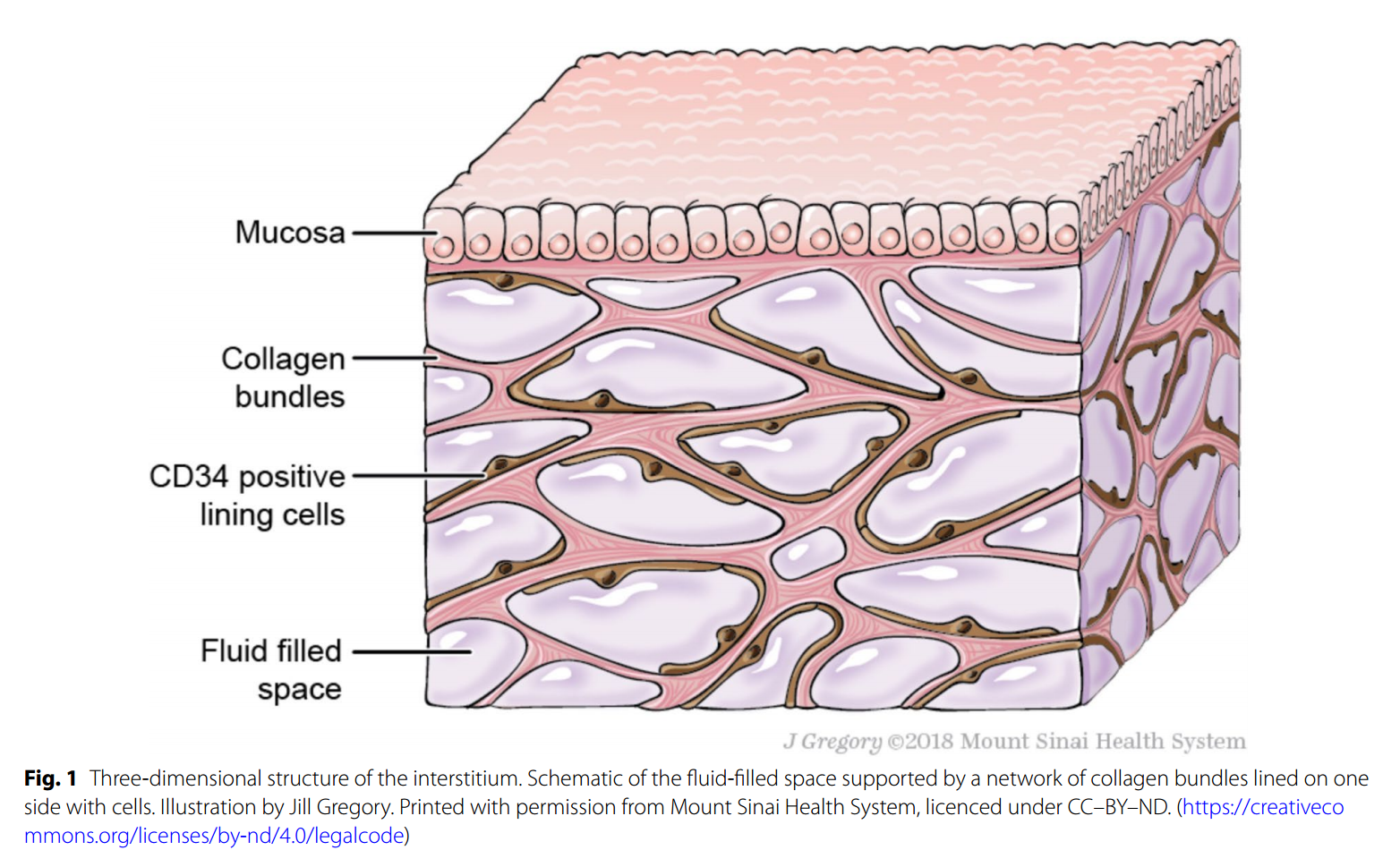
As septic shock patients can gain up to one-third of their weight in a few days due to interstitium expansion, this “third space” deserves closer attention and should be understood as a whole by the intensivist. The interstitium has long been neglected and considered as a passive reservoir, whereas the vascular compartment was the only focus. Major physiology discoveries were made in the past decades, revealing how the interstitium plays a major role during acute inflammation, especially in regulating capillary filtration.
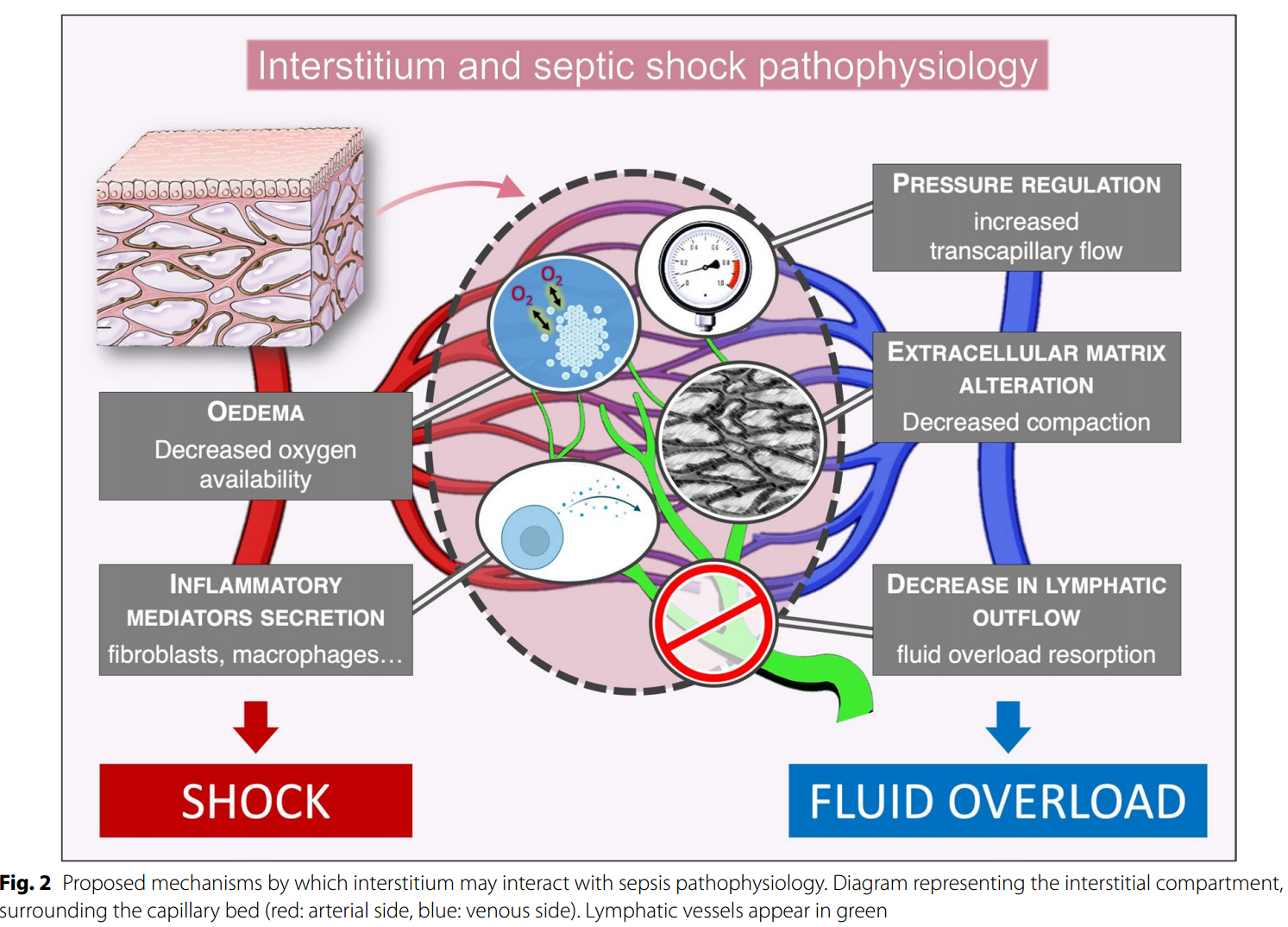
Five potential intersections between septic shock pathophysiology and interstitium :
1. increase of oedema formation, interacting with organ function and metabolites diffusion.
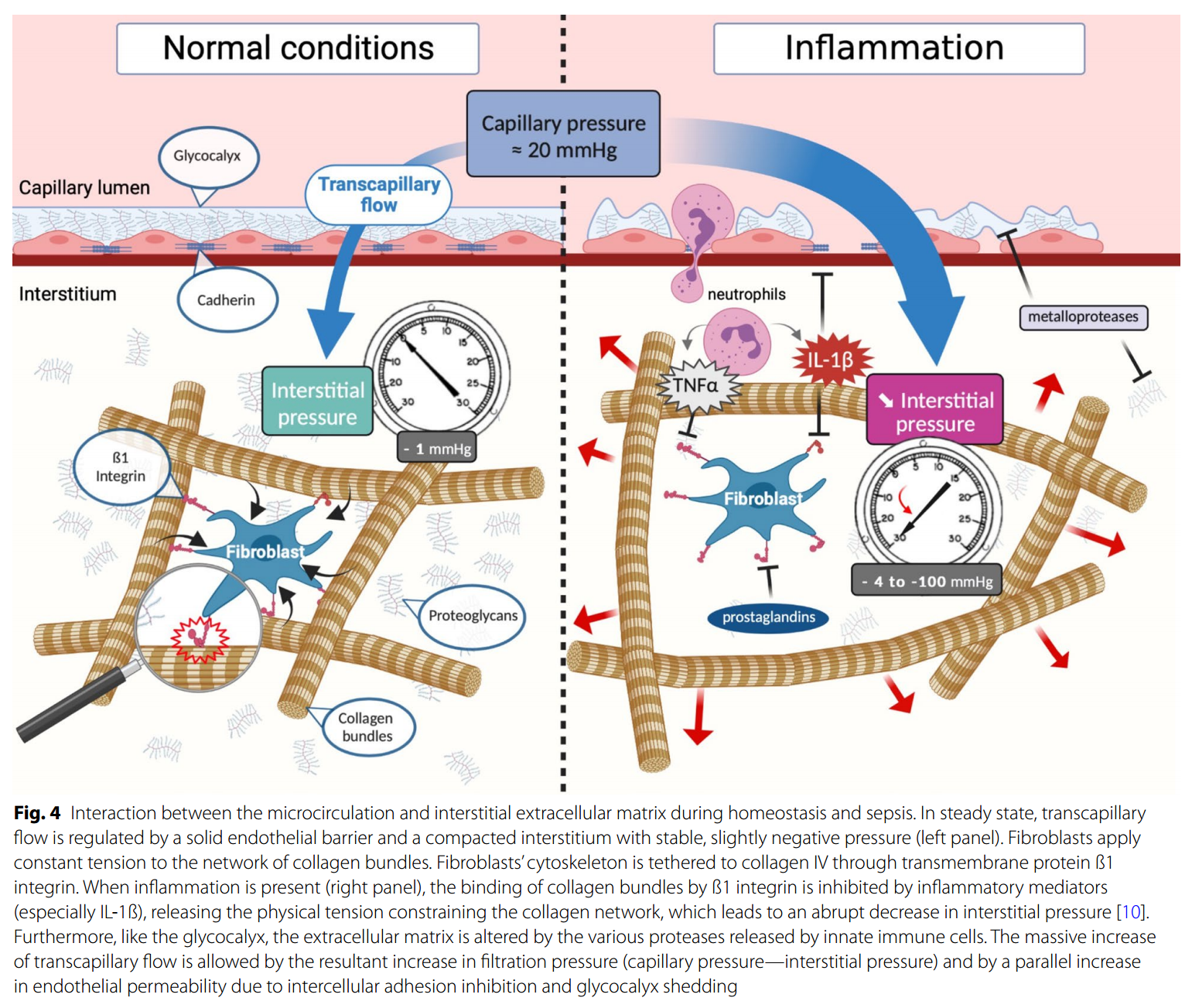
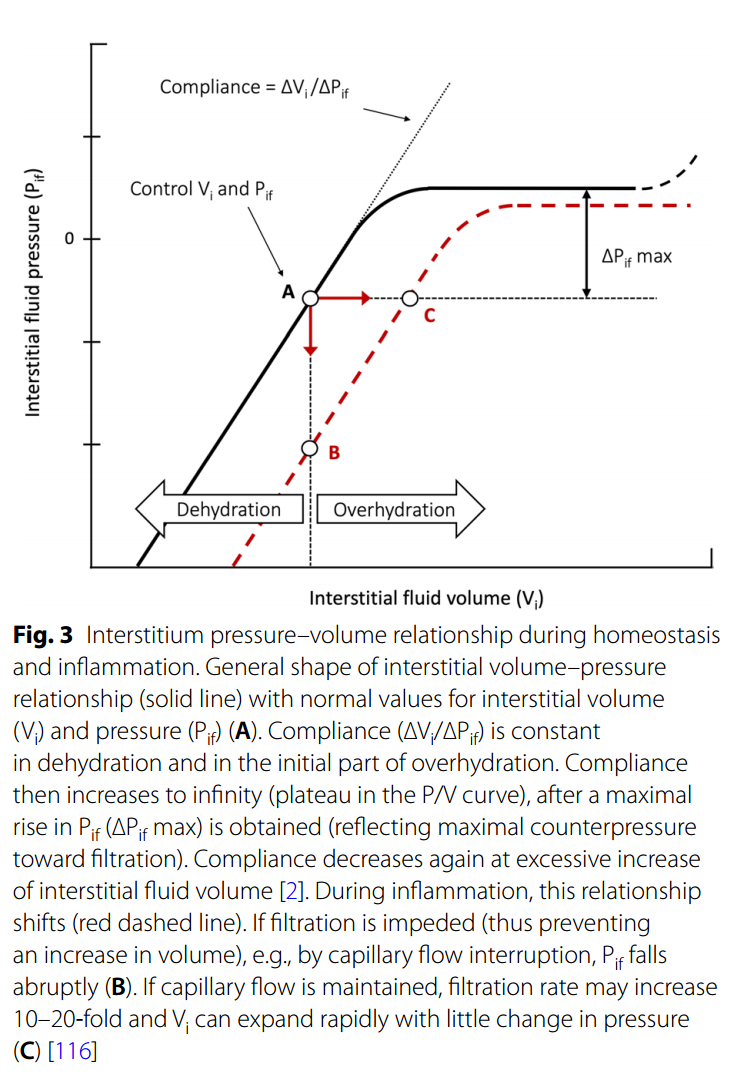
2. interstitial pressure self-regulation, increasing transcapillary fow.
3. alteration of the extracellular matrix.
4. interstitial secretion of infammatory mediators.
5. decrease of lymphatic outfow .