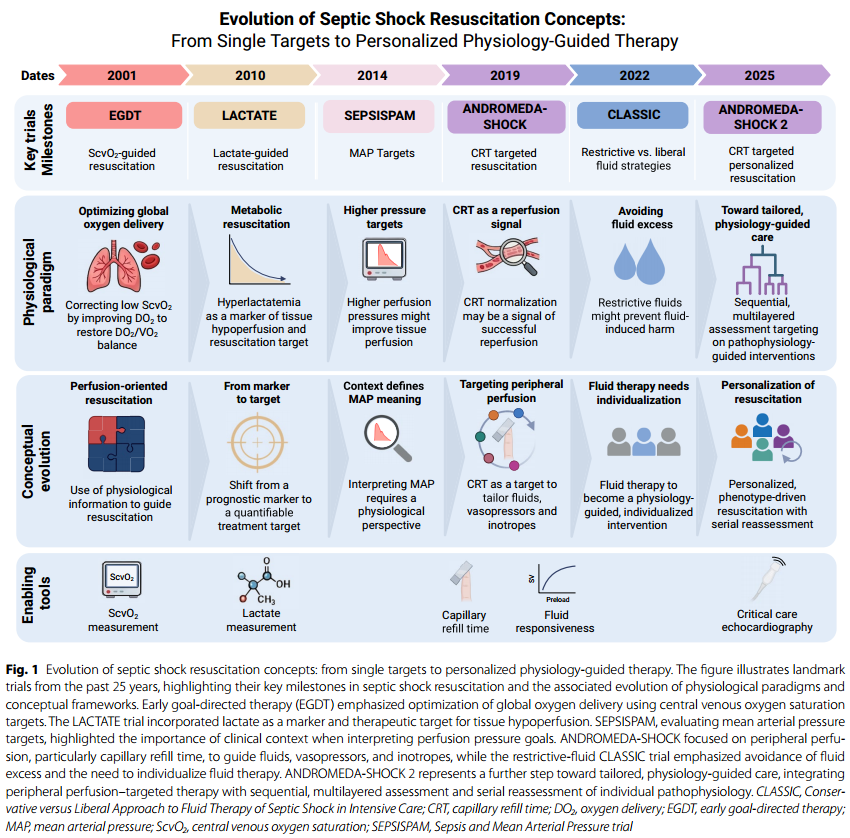
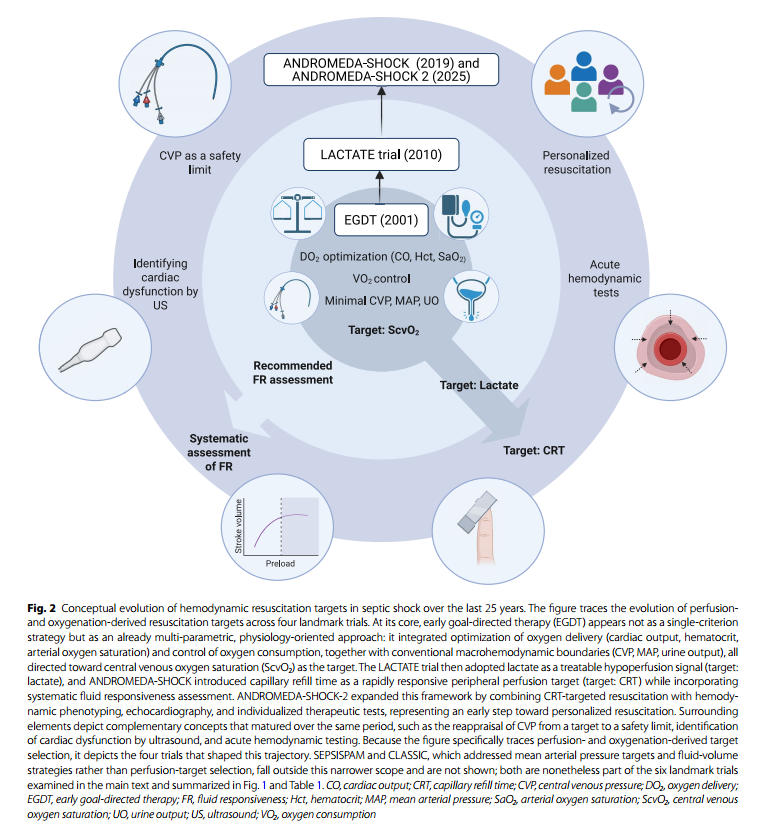
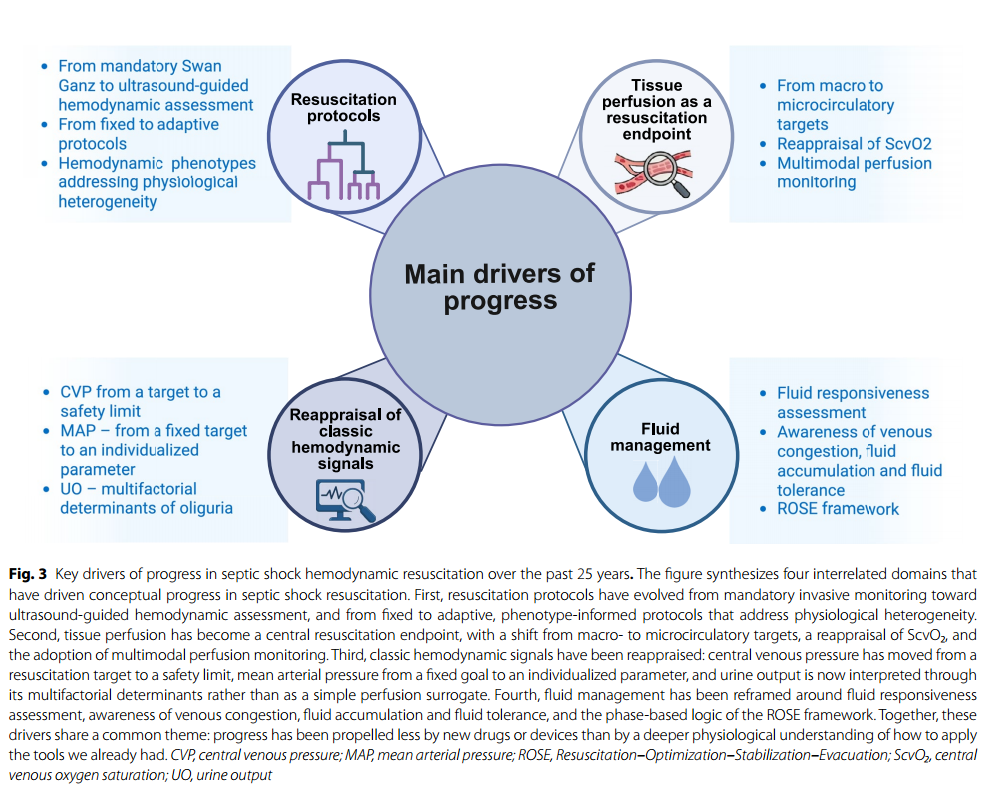
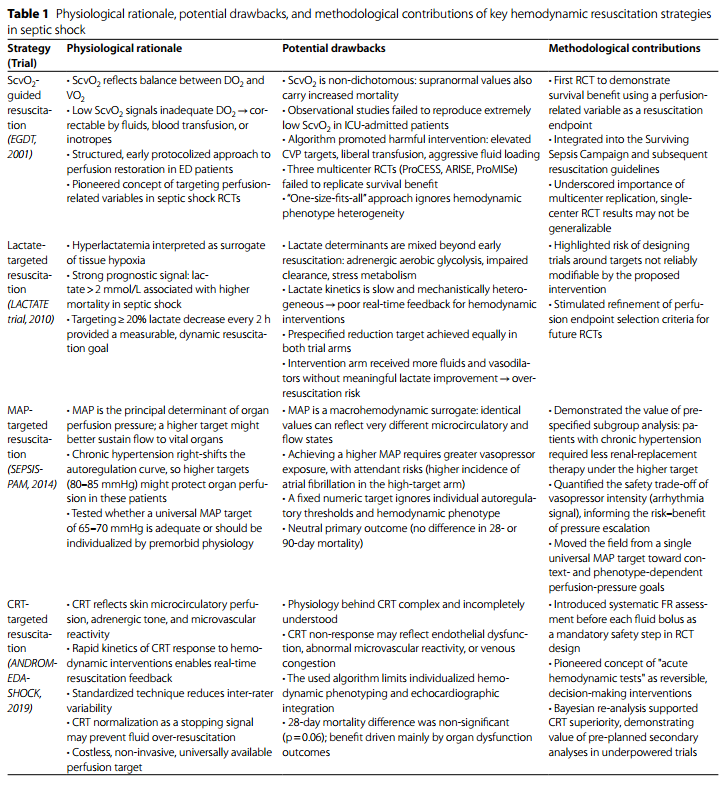
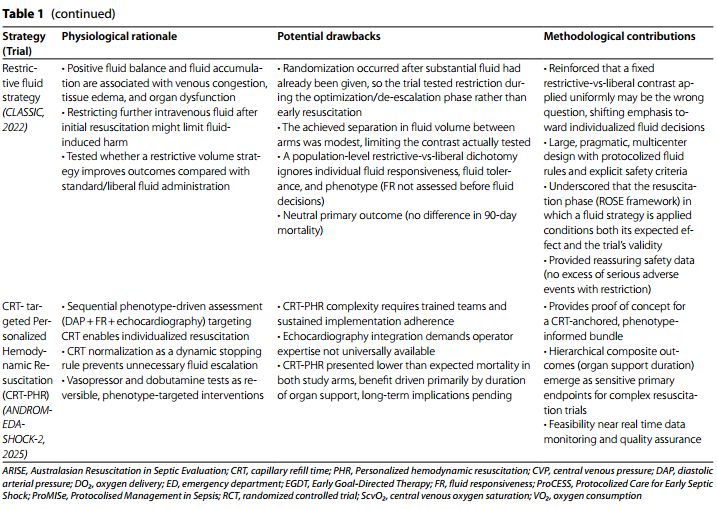
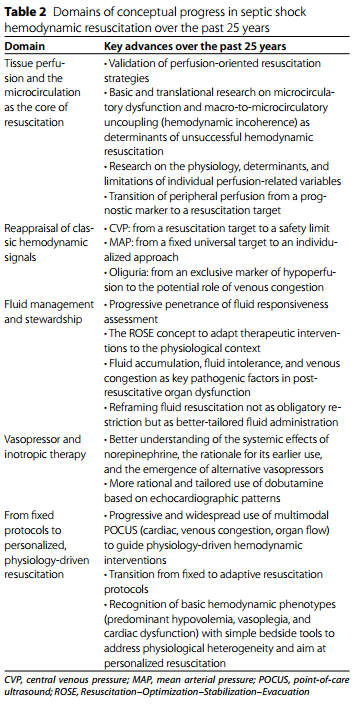
Strategies centered on fixed and isolated physiological targets have repeatedly failed to achieve reproducible improvements in patient-centered outcomes. Recent data support a shift from isolated hemodynamic or metabolic targets, toward a physiology-guided, phenotype-driven resuscitation strategy, in which interventions are applied as reversible tests within short decision cycles and guided by rapidly responsive perfusion signals.