Management of Refractory Anaphylaxis : An Overview of Current Guidelines
allergists, emergency physicians, intensivists, paediatricians and anaesthetists need to be aware of RA management, even if this is a rare event.
less than 20% of anaphylaxis reactions are treated with adrenaline.
around 90% of anaphylaxis events respond to a single dose of adrenaline (IM).
=> the majority of anaphylaxis reactions resolve spontaneously or with just a single dose of adrenaline.
adrenaline = first-line anaphylaxis therapy, should be repeated for persistent or worsening signs combined with fluid resuscitation.
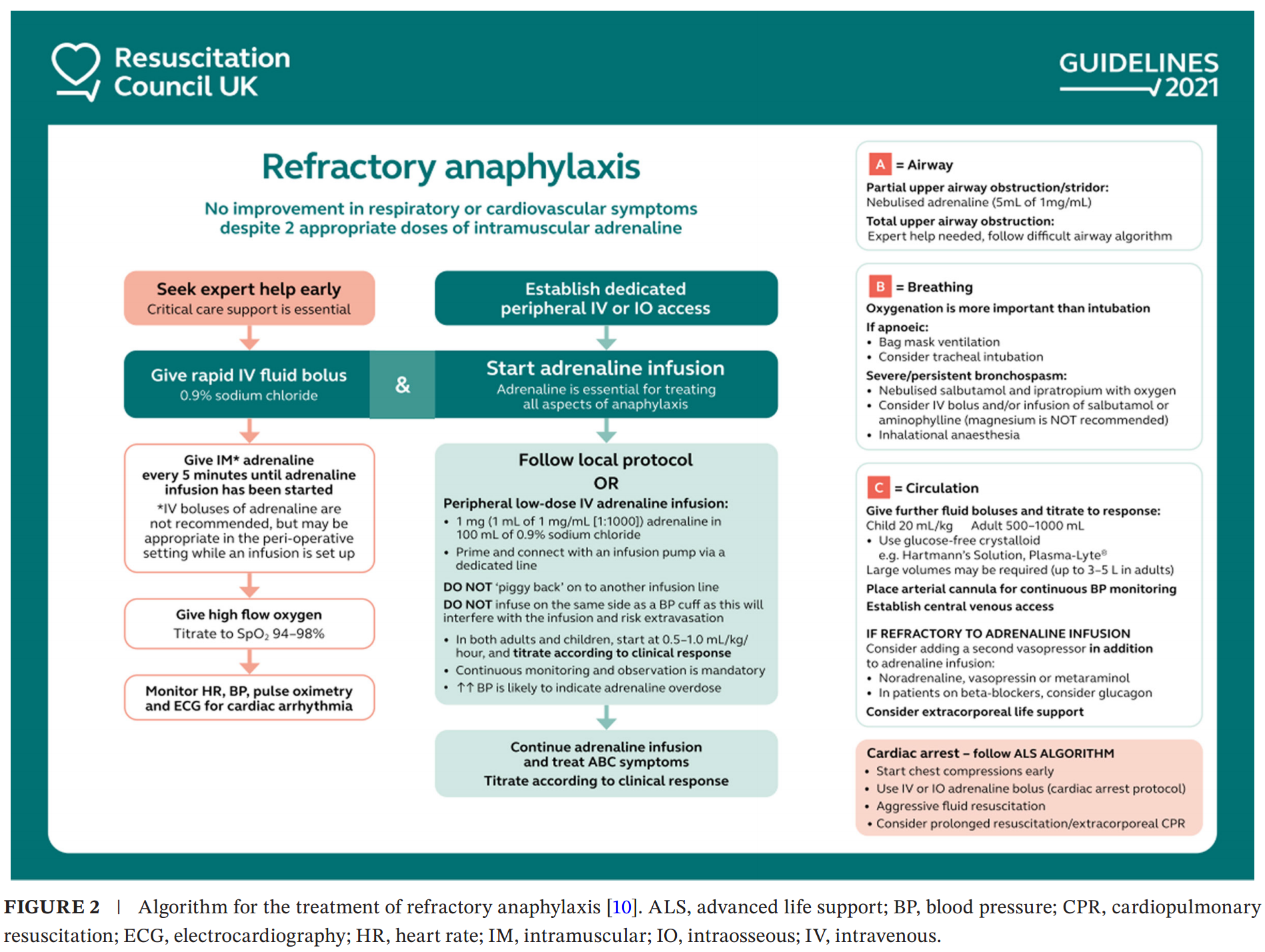
refractory anaphylaxis (RA) as an anaphylaxis which fails to adequately respond to 2-3 doses of IM adrenaline (several definitions),
RA = prompt escalation (treatment + staff with appropriate expertise).
anaphylaxis in the perioperative setting is frequently more severe than that in the community < concurrent cardiovascular compromise induced by the anaesthetic drugs.
in patients with a predominant respiratory compromise (severe bronchospasm and severe laryngeal oedema), the use of short-acting bronchodilator treatment (including adrenaline) or of inhaled adrenaline is recommended in most guidelines but not detailed.
“IM adrenaline is the first-line anaphylaxis treatment in all current guidelines for the treatment of anaphylaxis in the community or hospital setting.”
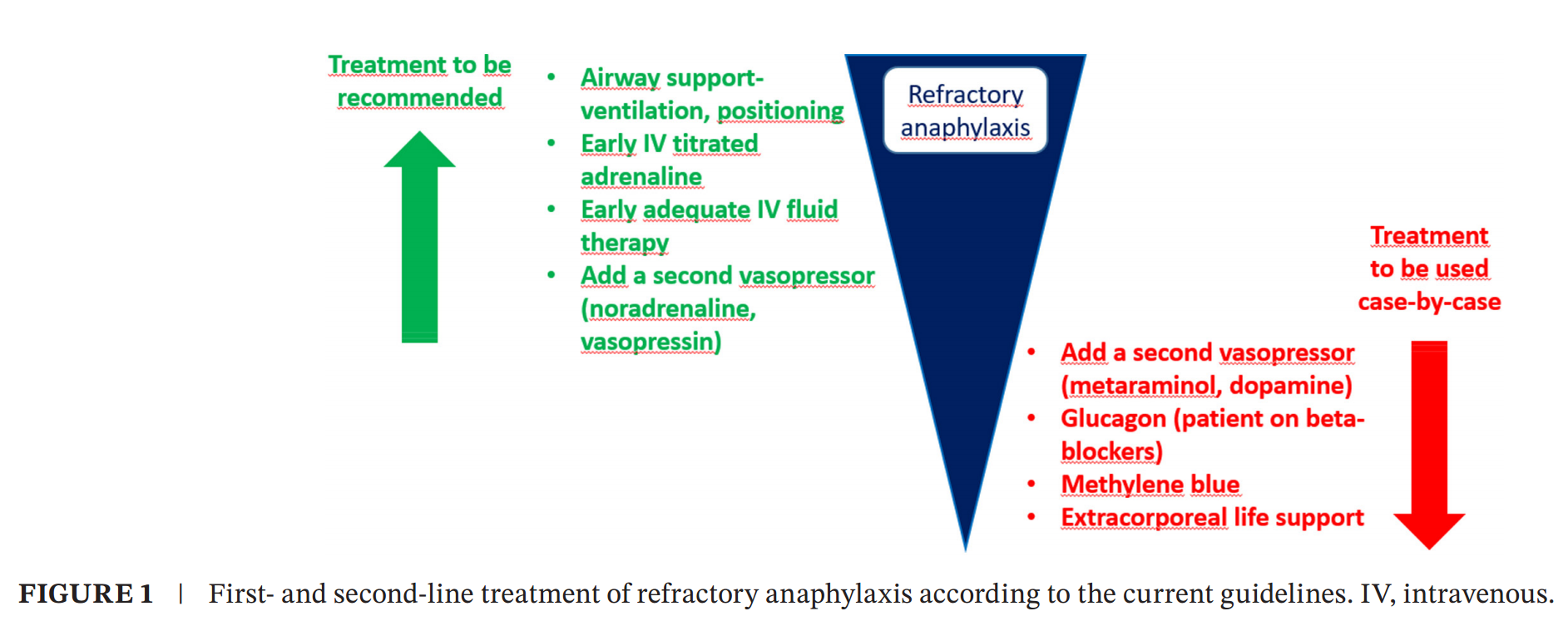
most guidelines for the treatment of anaphylaxis in the community or hospital setting flag the need to initiate and titrate IV adrenaline infusions for RA, that is persistence of features of anaphylaxis despite initial treatment with 2–3 doses of IM adrenaline, combined with adequate fluid therapy.
low-dose intravenous adrenaline infusion is more effective than IV bolus dosing and resulted in a lower total dose requirement and a favourable safety profile.
timely fluid resuscitation is a crucial part of the treatment for RA.
for anaphylaxis, clinical data are lacking to justify the choice of one solute over another.
colloids should only be considered as a second-line treatment when hypovolaemia persists despite the administration of an adequate volume of crystalloids.
“Defining RA as when anaphylaxis does not respond to two doses of adrenaline and appropriate initial fluid therapy would be a pragmatic choice in flagging the potential for severe reactions, in particular in the perioperative setting, and thus the need to escalate and seek expert help and commence treatment with intravenous adrenaline infusion and additional resuscitative measures. ”