Venous congestion from a vascular waterfall perspective: reframing congestion as a dynamic Starling resistor phenomenon
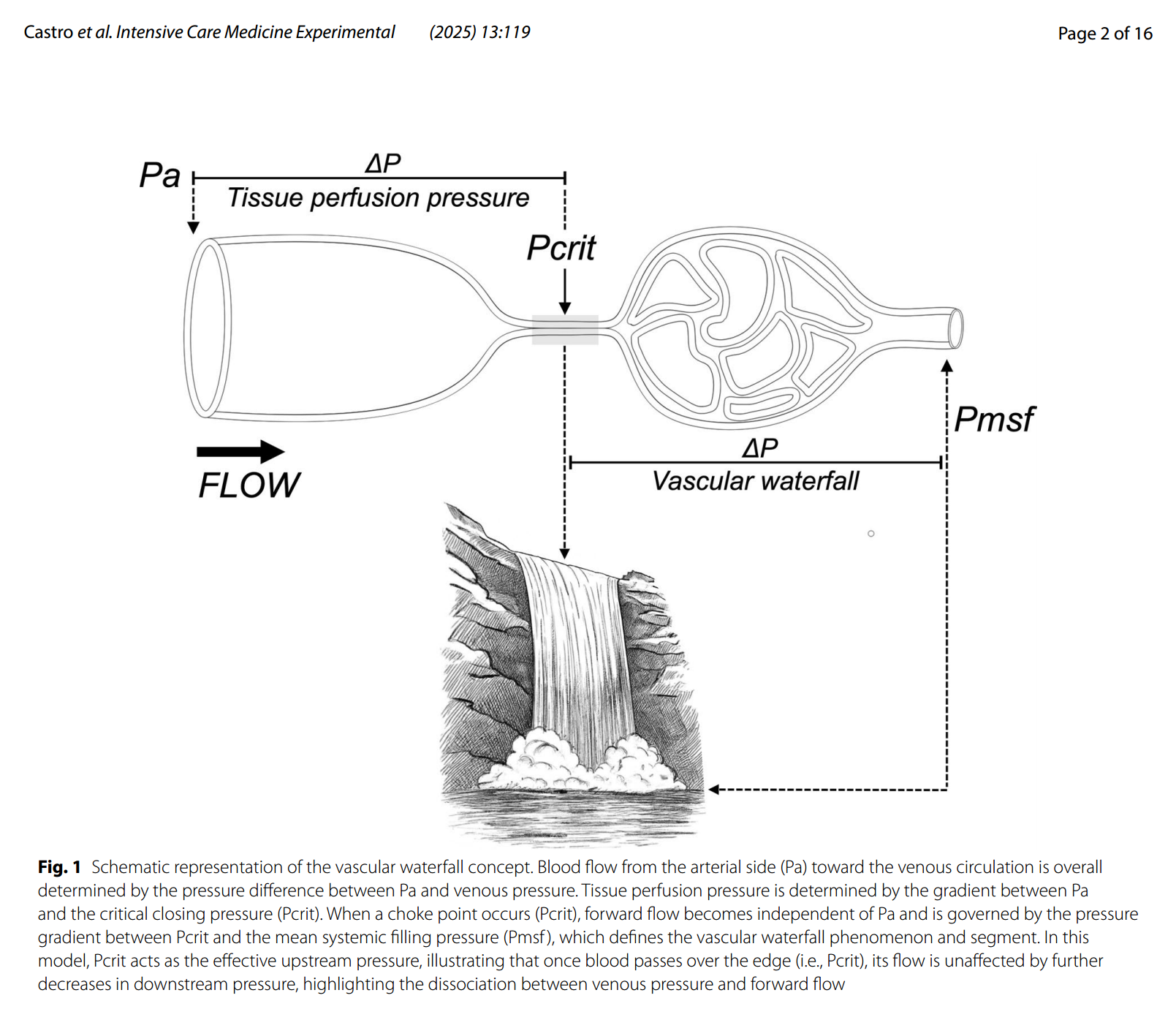
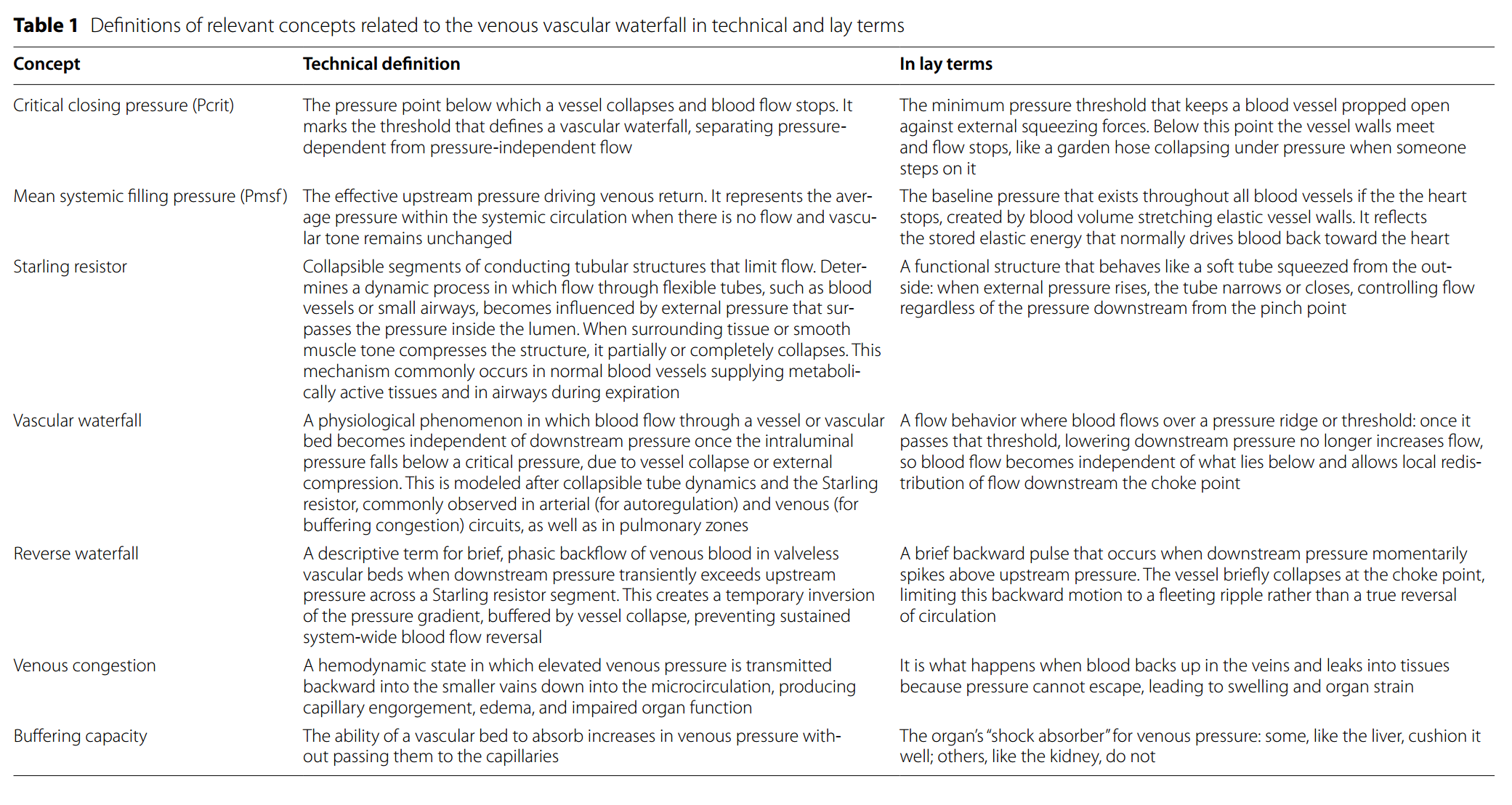
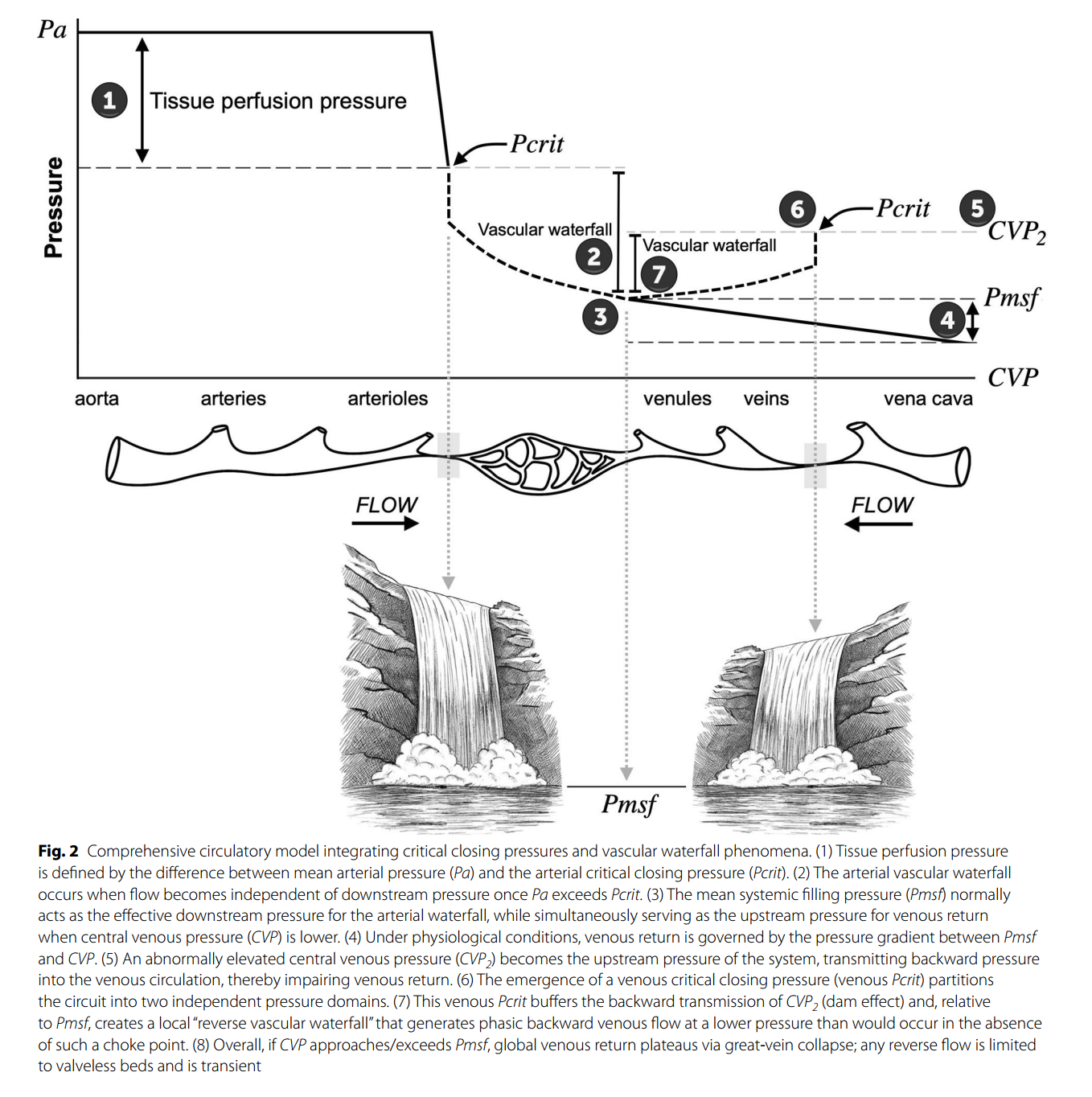
The vascular waterfall paradigm, long recognized in the arterial domain, is highly relevant on the venous side, where congestion often dictates outcomes in critical illness.
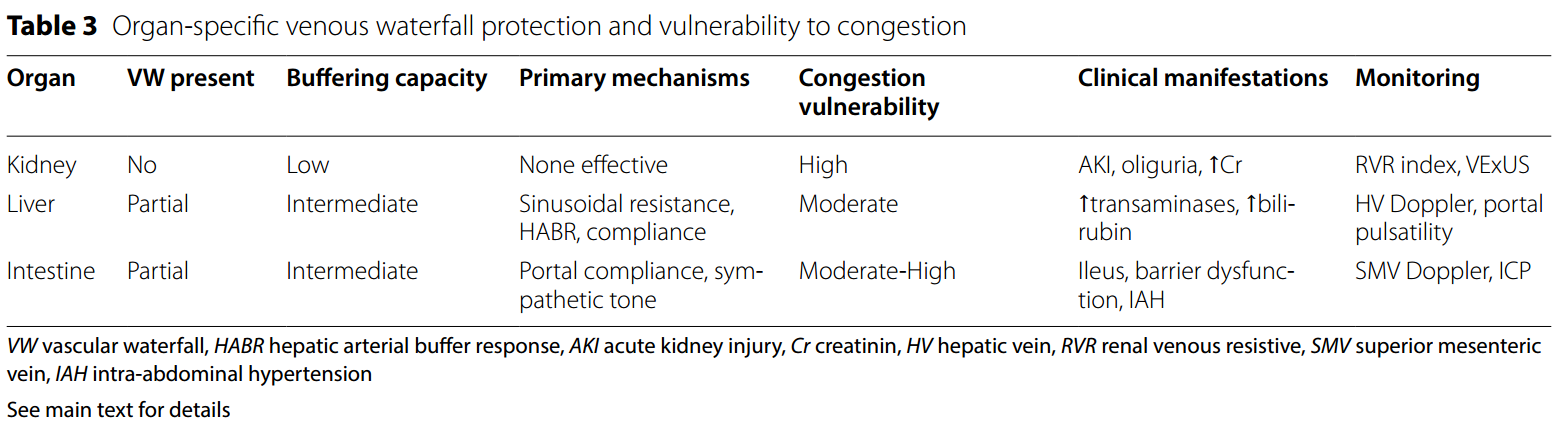
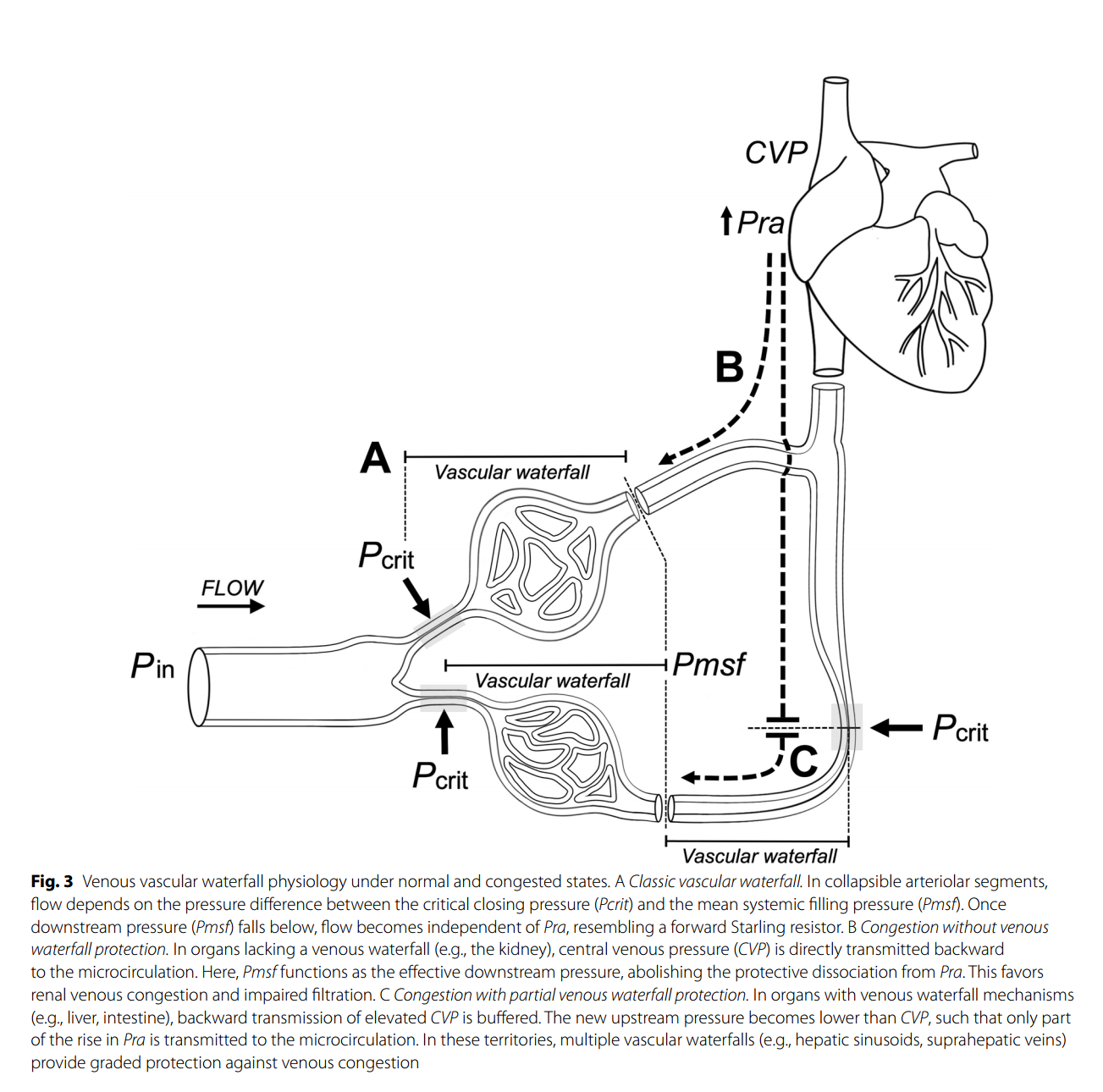
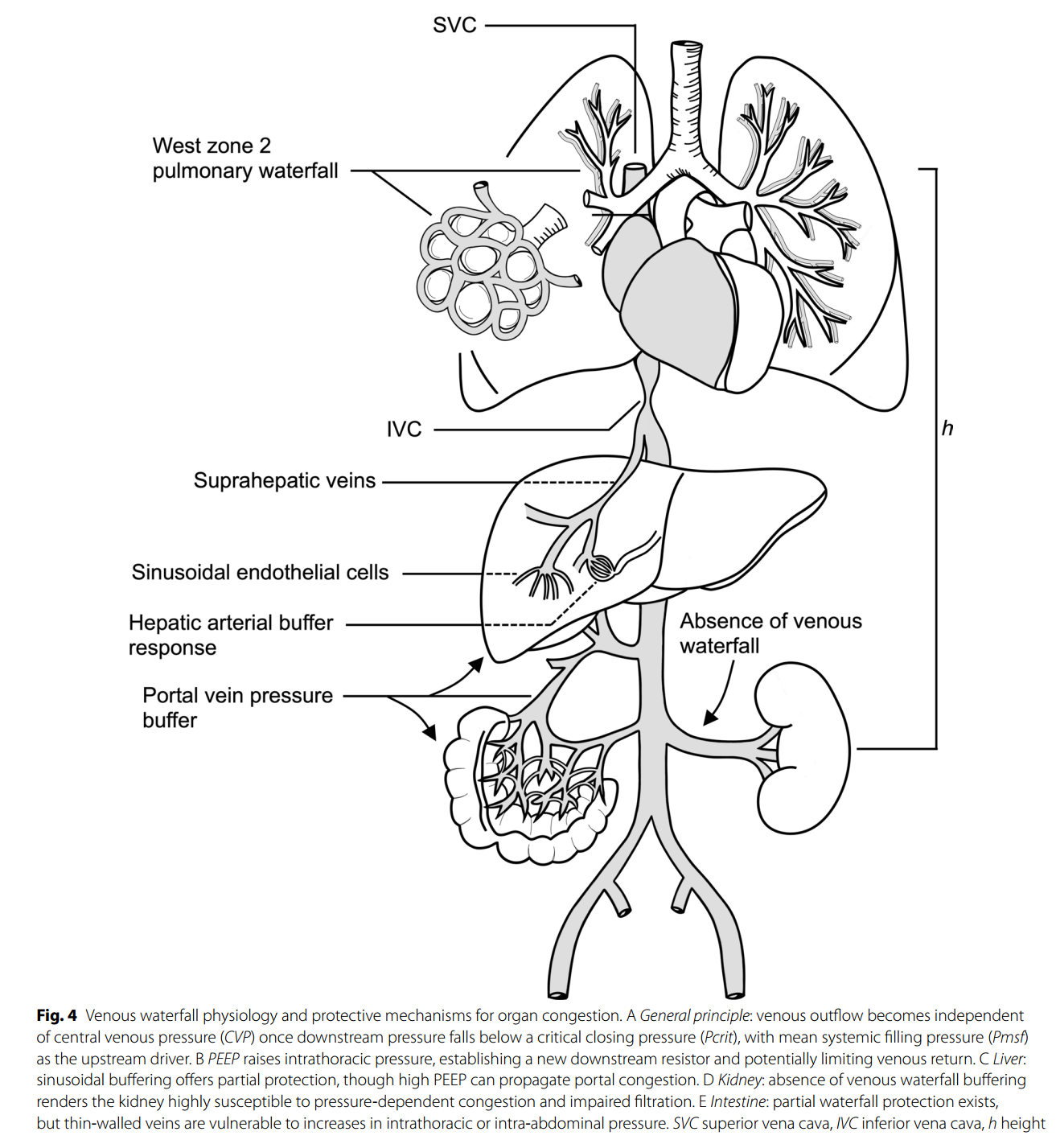
The presence, absence, or partial efectiveness of venous waterfall mechanisms determines organ-specifc susceptibility: the liver retains partial bufering, the kidney lacks protective capacity, and the intestine represents an intermediate case.
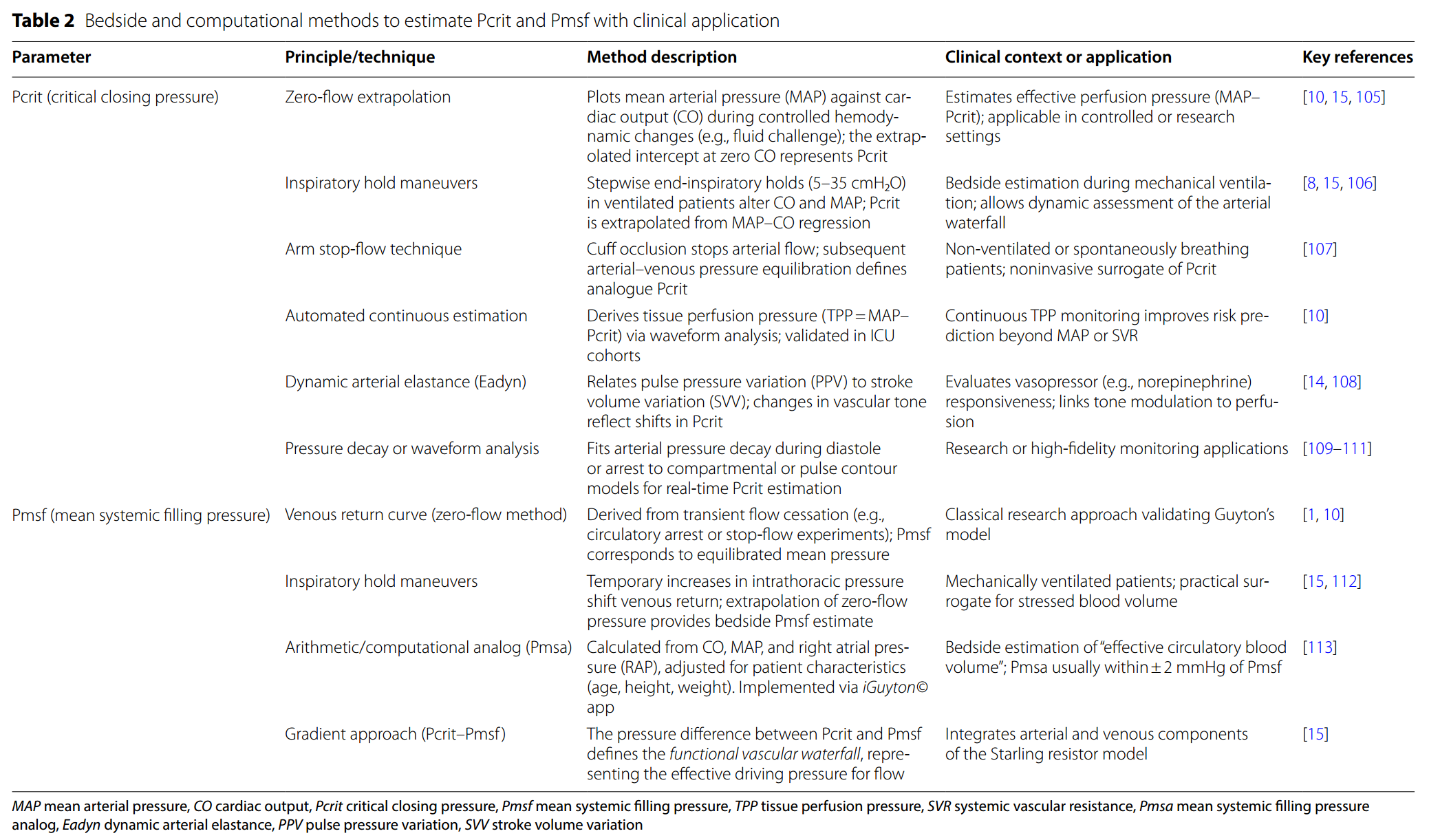
By recognizing that both venous and extravascular pressures can establish effective downstream resistors, congestion is reframed as an active physiological process mediated by Starling resistor dynamics, rather than a passive consequence of an elevated CVP.
This perspective provides a mechanistic explanation for the dissociation between venous pressures and organ injury and must inform individualized strategies for fluid resuscitation, ventilatory support, and decongestive therapy.
Future research should aim to integrate noninvasive vascular waterfall assessment into multimodal monitoring and to develop therapeutic strategies that explicitly account for venous waterfall physiology.