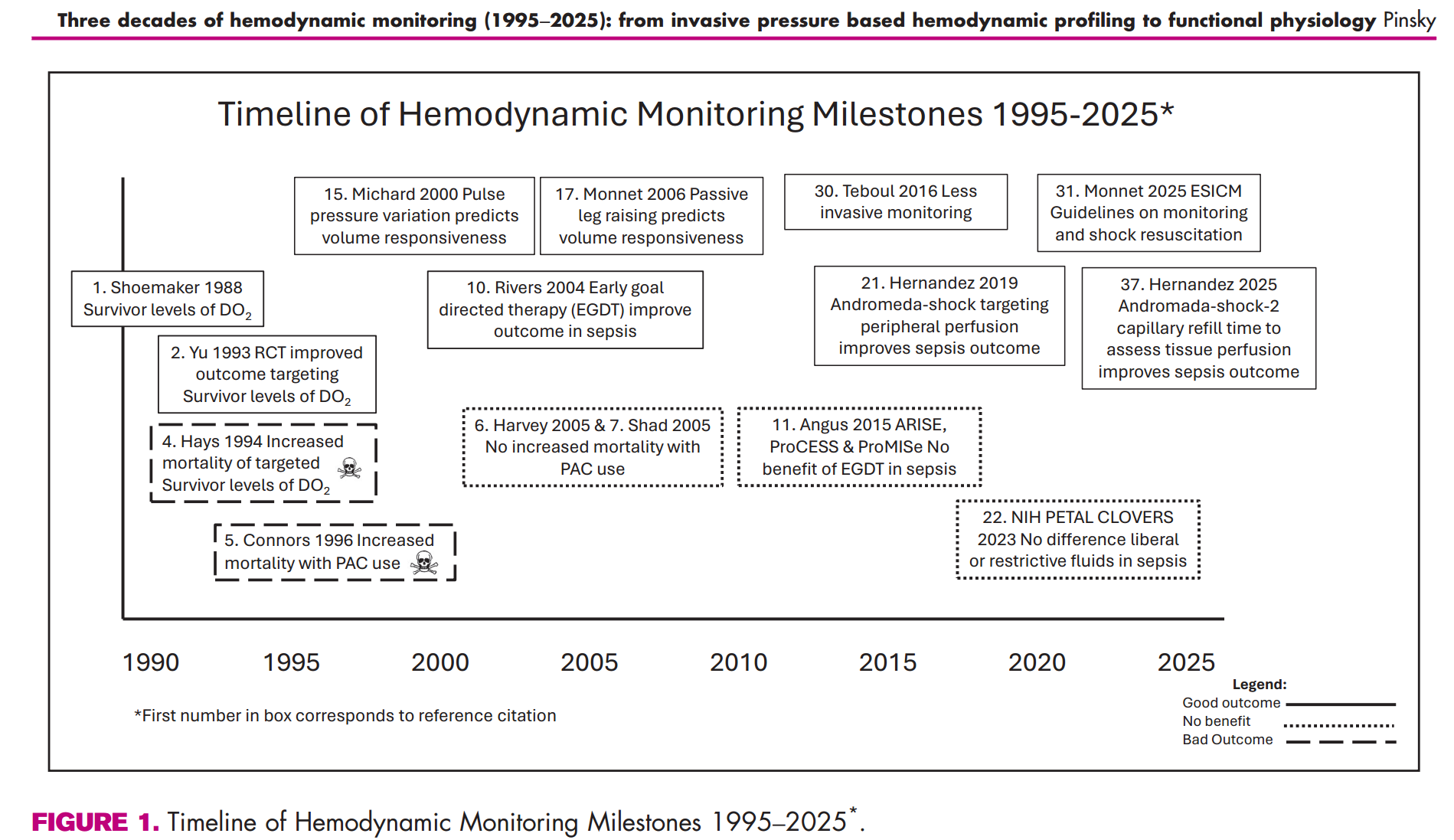
Three decades of hemodynamic monitoring (1995–2025) : from invasive pressure based hemodynamic profiling to functional physiology
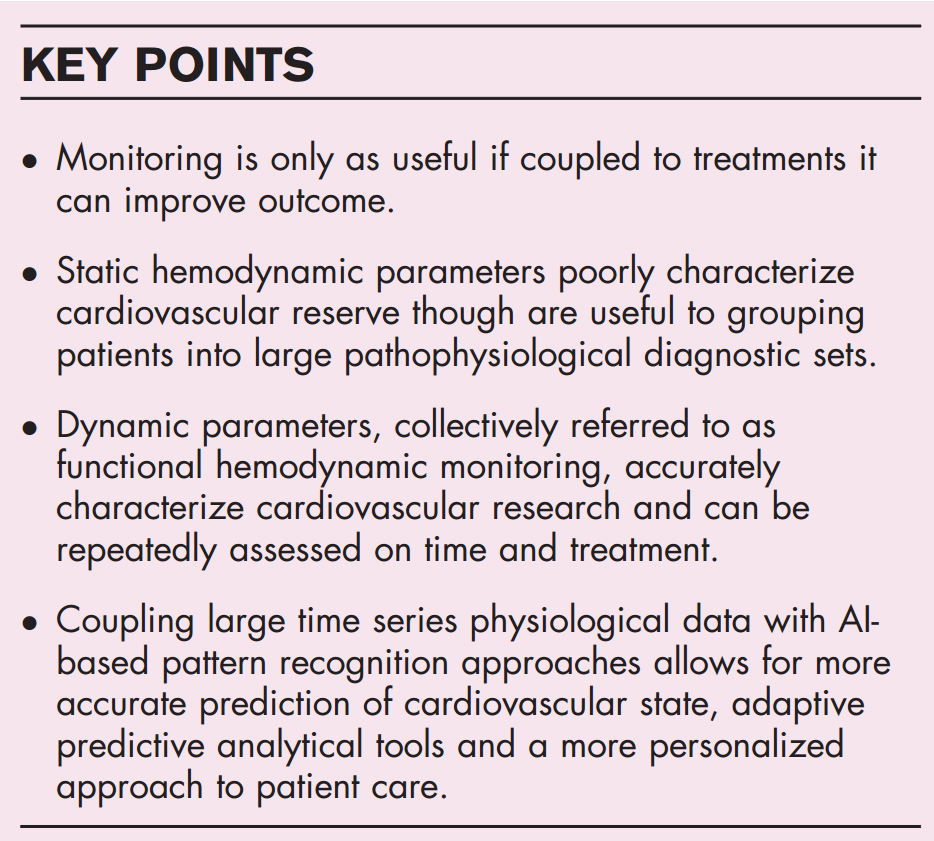
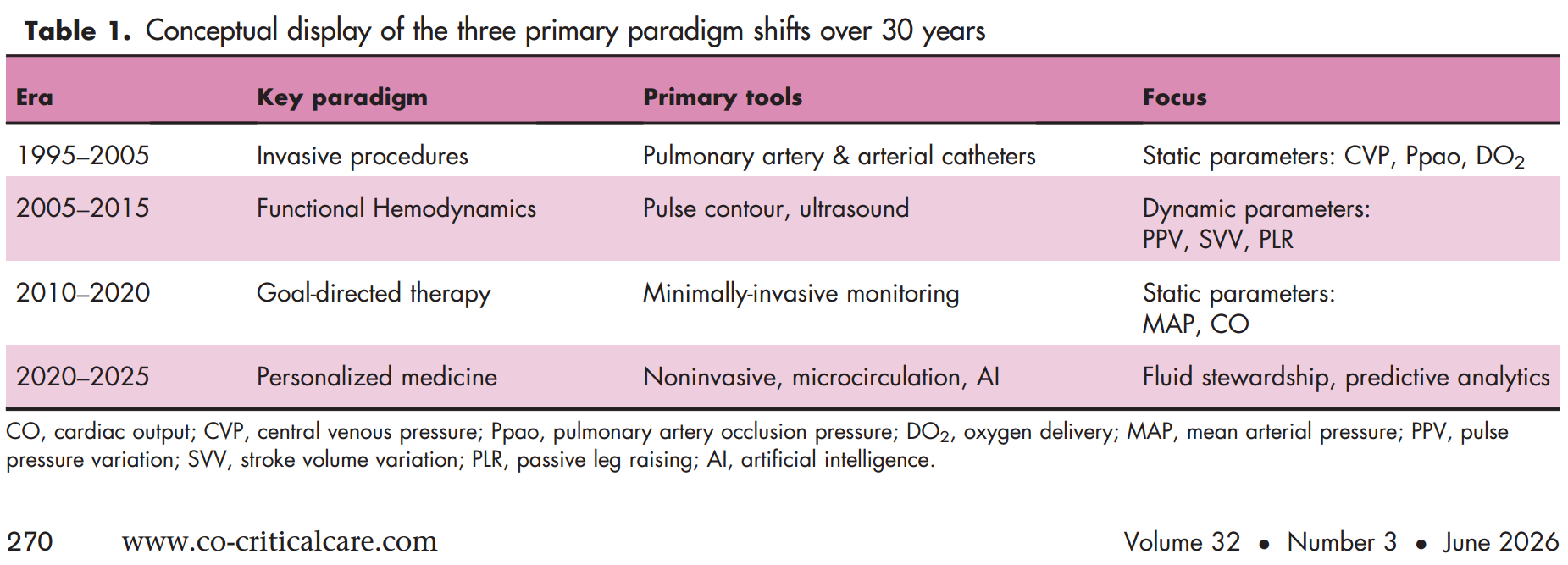
Hemodynamic monitoring creates a window into the patient's physiological status. Using functional hemodynamic monitoring principles to plumb cardiovascular reserve, we can now be more precise in our resuscitation efforts, avoiding giving fluids to nonfluid responsive patients and titrating vasopressors more safely to sustain organ perfusion pressure. However, a monitor is only as good as the intervention it guides.